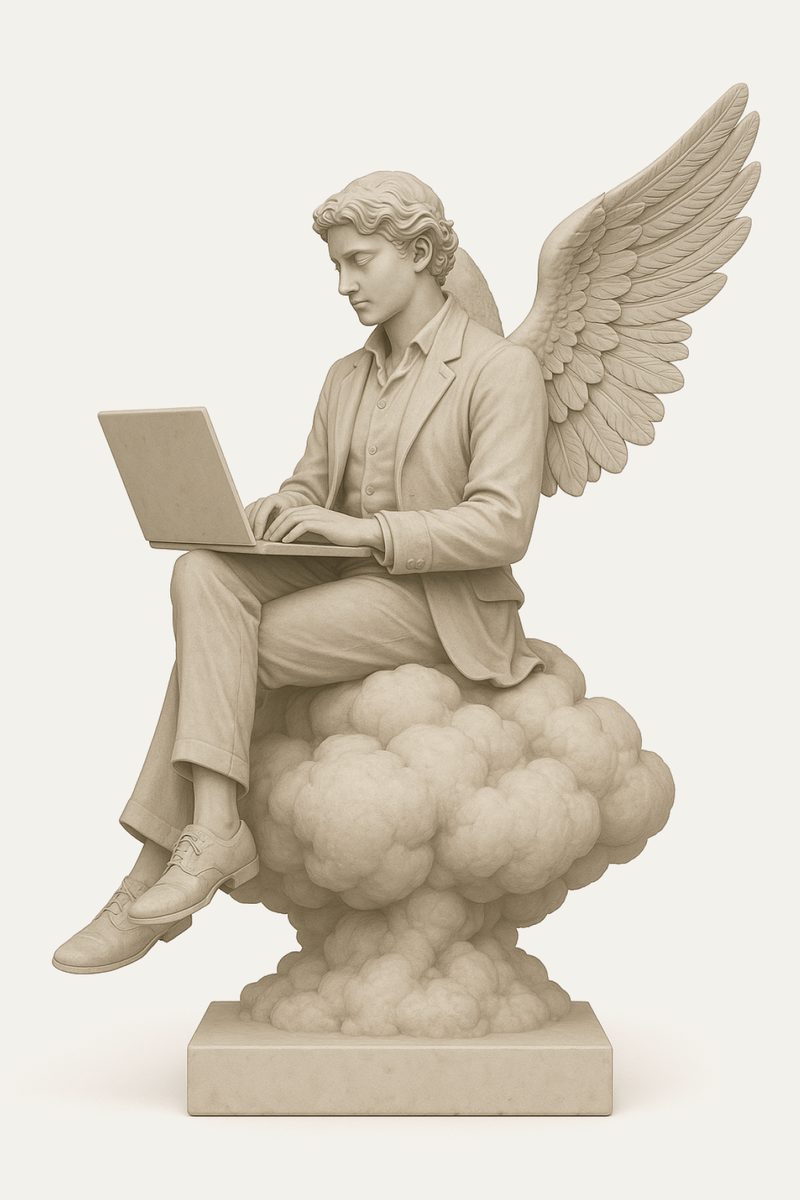
There was a time when genius needed a chisel, a canvas, or a quill. When creation meant years of toil, and beauty was bound by the limits of human hands. In that time, Leonardo da Vinci stood at the intersection of art and science. Both a dreamer and a builder, an artist and an engineer.
Today, we stand at a similar crossroads. But this time, the tools are different.
AI is not here to replace the artist. It is here to arm the artist with new brushes. Tools that respond to thought, amplify intuition, and make the impossible possible. We are entering an era where words become images, sketches become films, and ideas become prototypes within minutes. The silicon circuits hum with creative potential.
This is not about efficiency alone. It's about expanding the canvas. Just as da Vinci saw flying machines in the anatomy of birds, today's creators can see entire worlds bloom from code, data, and neural networks. The creative process is no longer confined by technical skills. It's fueled by curiosity, vision, and the courage to experiment.
We're witnessing the rebirth of the Renaissance spirit, but this time it's supercharged.
In this new age, everyone is a polymath. With AI as a co-creator, the barriers to entry fall. A solo thinker can now build symphonies of software, design immersive experiences, or craft stories that rival Hollywood. All from a laptop.
The tools are powerful, but the intent is what matters. Da Vinci didn't invent to automate. He invented to explore. And so should we.